
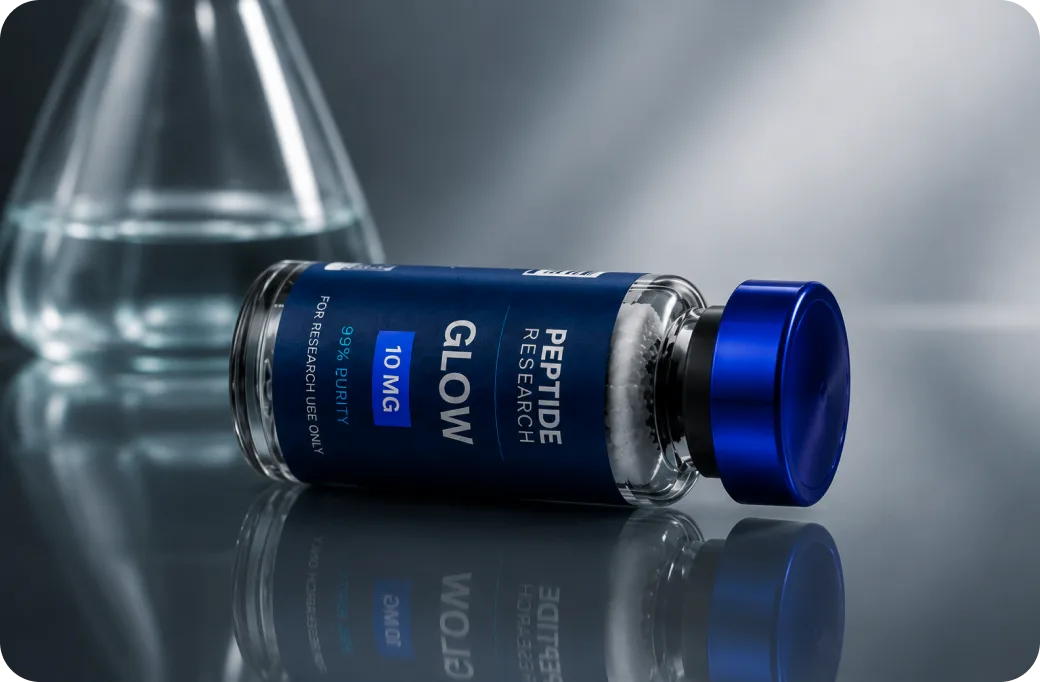
Peptide reconstitution is the step where a stable lyophilized powder becomes a working laboratory solution. A consistent routine protects the material, reduces waste and makes concentrations reproducible between experiments.
Before you start
- Let the sealed vial reach room temperature to prevent condensation.
- Check the batch number against its Certificate of Analysis.
- Review any solubility notes on the COA or product page.
- Prepare a clean, labeled workspace and sterile equipment.
- Decide the target concentration before adding any solvent.
Choosing a solvent
Most research peptides dissolve in sterile water or bacteriostatic water. Some sequences need a different approach:
- Basic peptides (net positive charge) often dissolve better with a small amount of dilute acetic acid.
- Acidic peptides (net negative charge) may dissolve better in a dilute basic buffer.
- Hydrophobic peptides may need a small volume of an organic solvent such as DMSO first, then dilution with buffer.
When in doubt, test solubility with a small portion of the material before dissolving the full vial.
Calculating concentration
Concentration is the peptide amount divided by the solvent volume. For example, adding 2 mL of solvent to a 5 mg vial gives 2.5 mg/mL. Adding 1 mL to the same vial gives 5 mg/mL. Write the concentration on the vial label as soon as it is prepared.
Step-by-step reconstitution
- Wipe the vial stopper with an alcohol swab and let it dry.
- Draw the planned volume of solvent with a sterile syringe or pipette.
- Add the solvent slowly down the inside wall of the vial, not directly onto the powder.
- Swirl gently or roll the vial until the powder dissolves. Avoid shaking, which can cause foaming and aggregation.
- Check that the solution is clear. Cloudiness can mean the solvent is not suitable for that sequence.
- Label the vial with the batch number, concentration, solvent and date.
After reconstitution
Reconstituted peptides are much less stable than powder. Store solutions at 2–8 °C for short-term use, or divide them into single-use aliquots and freeze them. Our peptide storage guide covers this in detail, and our batch documentation guide shows how to record each preparation.
All products referenced in this article are supplied for laboratory research use only. They are not intended for human or veterinary use, diagnosis or treatment.
Built with Peptix. This blog layout is part of Peptix, a peptide WordPress & WooCommerce theme. View the theme →





Helpful checklist. Letting the solvent run down the side of the vial instead of straight onto the powder is a step many guides skip.