
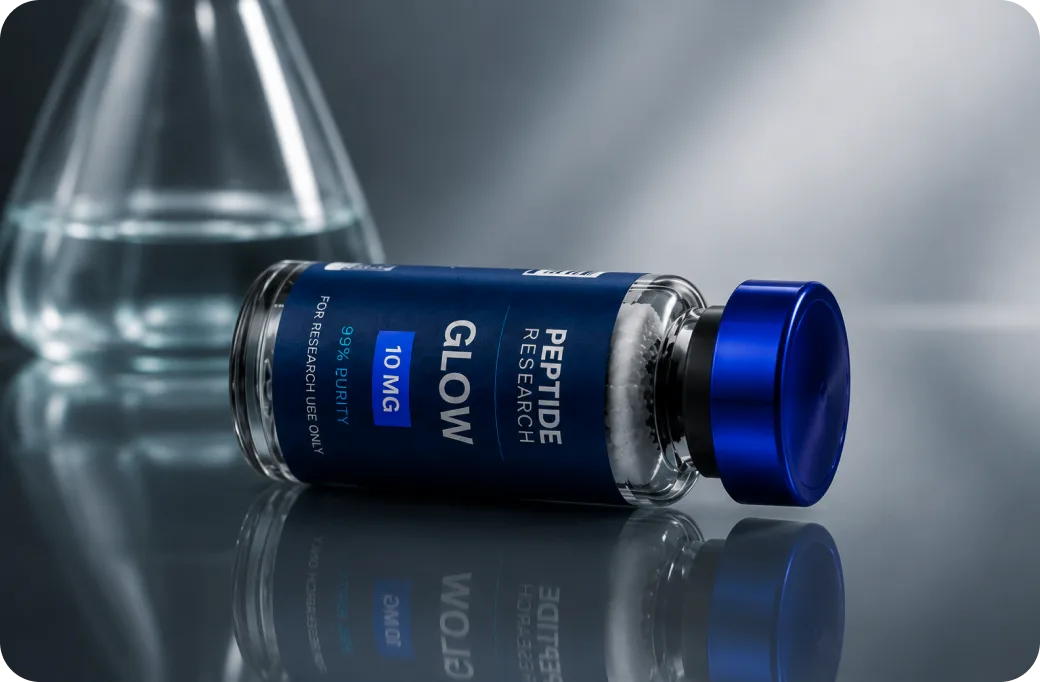
Correct peptide storage protects purity long after a batch leaves the laboratory. Even a compound with excellent COA results can degrade if it is exposed to heat, light, moisture or repeated freeze-thaw cycles. These guidelines cover both lyophilized (powder) and reconstituted peptides.
Why peptides degrade
Peptides break down through a few common pathways: hydrolysis caused by moisture, oxidation of sensitive amino acids such as methionine, cysteine and tryptophan, and aggregation in solution. Temperature speeds up all of these reactions, which is why cold, dry and dark storage is the standard recommendation.
Storing lyophilized peptides
Lyophilized peptides are the most stable form and should stay sealed until they are needed.
- Long-term: store sealed vials at -20 °C, or -80 °C for extended periods.
- Short-term: a few weeks at 2–8 °C is generally acceptable for most sequences.
- Light: keep vials in their box or an opaque container.
- Moisture: store vials in a sealed container with desiccant.
- Opening: let the vial reach room temperature before opening so condensation does not form on the powder.
Storing reconstituted peptides
Once dissolved, peptides are far less stable. Plan reconstitution around your experiment schedule and only prepare what you need. Our peptide reconstitution guide explains how to prepare solutions consistently.
- Store solutions at 2–8 °C for short-term use.
- For longer storage, divide the solution into single-use aliquots and freeze them at -20 °C or below.
- Avoid repeated freeze-thaw cycles – thaw each aliquot only once.
- Use sterile solvents and clean, labeled vials to prevent contamination.
Labeling and tracking
Label every vial and aliquot with the compound name, batch number, concentration and preparation date. Linking storage records to the batch’s certificate makes it easy to trace any unexpected result back to the material used. See our guide to batch documentation for a simple record-keeping routine.
Common storage mistakes to avoid
- Leaving vials at room temperature on the bench between sessions.
- Opening cold vials immediately after removing them from the freezer.
- Storing peptides in a frost-free freezer that cycles temperature.
- Re-freezing the same solution several times.
Key takeaways
Store lyophilized peptides cold, dry and dark, reconstitute only what you need, and aliquot solutions to avoid freeze-thaw damage. Good storage habits keep your materials consistent with the results shown on their Certificate of Analysis.
All products referenced in this article are supplied for laboratory research use only. They are not intended for human or veterinary use, diagnosis or treatment.
Built with Peptix. This blog layout is part of Peptix, a peptide WordPress & WooCommerce theme. View the theme →





Great tip about avoiding repeated freeze-thaw cycles. Aliquoting before freezing made a noticeable difference to the consistency of our results.
Glad it helped, Sofia. Small single-use aliquots are one of the easiest ways to protect stability.