
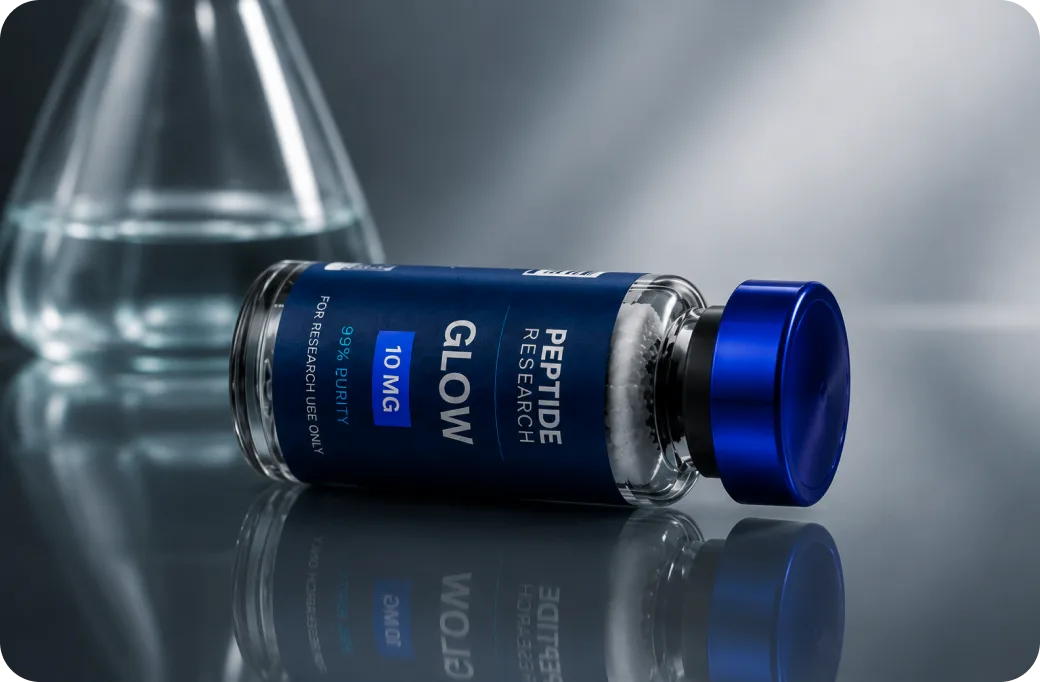
Peptide purity is the first number most researchers look at on a Certificate of Analysis. But what does 98% purity actually mean, how is it measured, and how much purity does your work need? This guide explains.
What peptide purity measures
Purity describes how much of a sample is the target peptide compared with everything else detected. It is almost always measured by HPLC (high-performance liquid chromatography), which separates the target compound from synthesis by-products and degradation products.
How to read a purity result
A result such as 98.09% means that 98.09% of the detected material is the target peptide. The remaining 1.91% consists of related substances, such as shorter or modified sequences. On the chromatogram, the target appears as one dominant peak; impurities appear as smaller peaks around it.
Common peptide impurities
- Deletion sequences – peptides missing one or more amino acids.
- Truncated sequences – chains that stopped growing during synthesis.
- Oxidized or deamidated forms – small chemical changes, often from poor storage.
- Residual reagents and salts – left over from synthesis and purification.
Purity vs. net peptide content
Purity is not the same as the amount of peptide in the vial. Lyophilized peptides also contain water and counter-ions such as acetate or TFA. Net peptide content describes the share of the total powder weight that is peptide, while purity describes the share of peptide material that is the correct sequence. Both can appear on a detailed COA.
How much purity do you need?
- ≥95% – suitable for many general research applications.
- ≥98% – preferred for quantitative and sensitive studies.
- ≥99% – used where even small impurities could affect results.
Higher purity also makes results easier to reproduce, because each batch behaves more consistently.
Purity is only half the story
A high purity result confirms the sample is clean, but not that it is the right compound. That is why purity should always be read together with mass spectrometry identity results. Learn more in HPLC vs. mass spectrometry and how to read peptide COA results, or check the purity of any batch in the COA Library.
All products referenced in this article are supplied for laboratory research use only. They are not intended for human or veterinary use, diagnosis or treatment.
Built with Peptix. This blog layout is part of Peptix, a peptide WordPress & WooCommerce theme. View the theme →





• Join the Discussion •
Leave a Comment
No comments yet. Start the discussion.